I cultivate 2 hectares, including 1.5 hectares of active vineyards. I consciously purchased old plots with vines aged between 40 and 100 years. Because Szekszárd’s fragmented topography changes wine profiles from one valley to another, my plots are scattered across the region. I bottle them separately as single-vineyard wines to document the diversity of the terroir.
Szekszárd Wine Region
Located in southern Hungary and is one of the country’s historic wine regions, with viticulture dating back to the Roman era. Today, the total cultivated area is approximately 2,100 hectares.
The landscape consists of a network of hills and valleys running almost north to south. A key feature of the terrain is the presence of deep, water-carved ravines—known locally as szurdik.
The primary subsoil consists a thick layer of loess mixed with red clay and Pannonian sand layers, which varies from a few meters to nearly 30 meters in depth.
The area has a continental climate with Mediterranean influences, characterized by high sunshine hours, warm summers, mild winters. The enclosed valleys provide natural protection against northern winds and spring frosts, ensuring a long growing season.
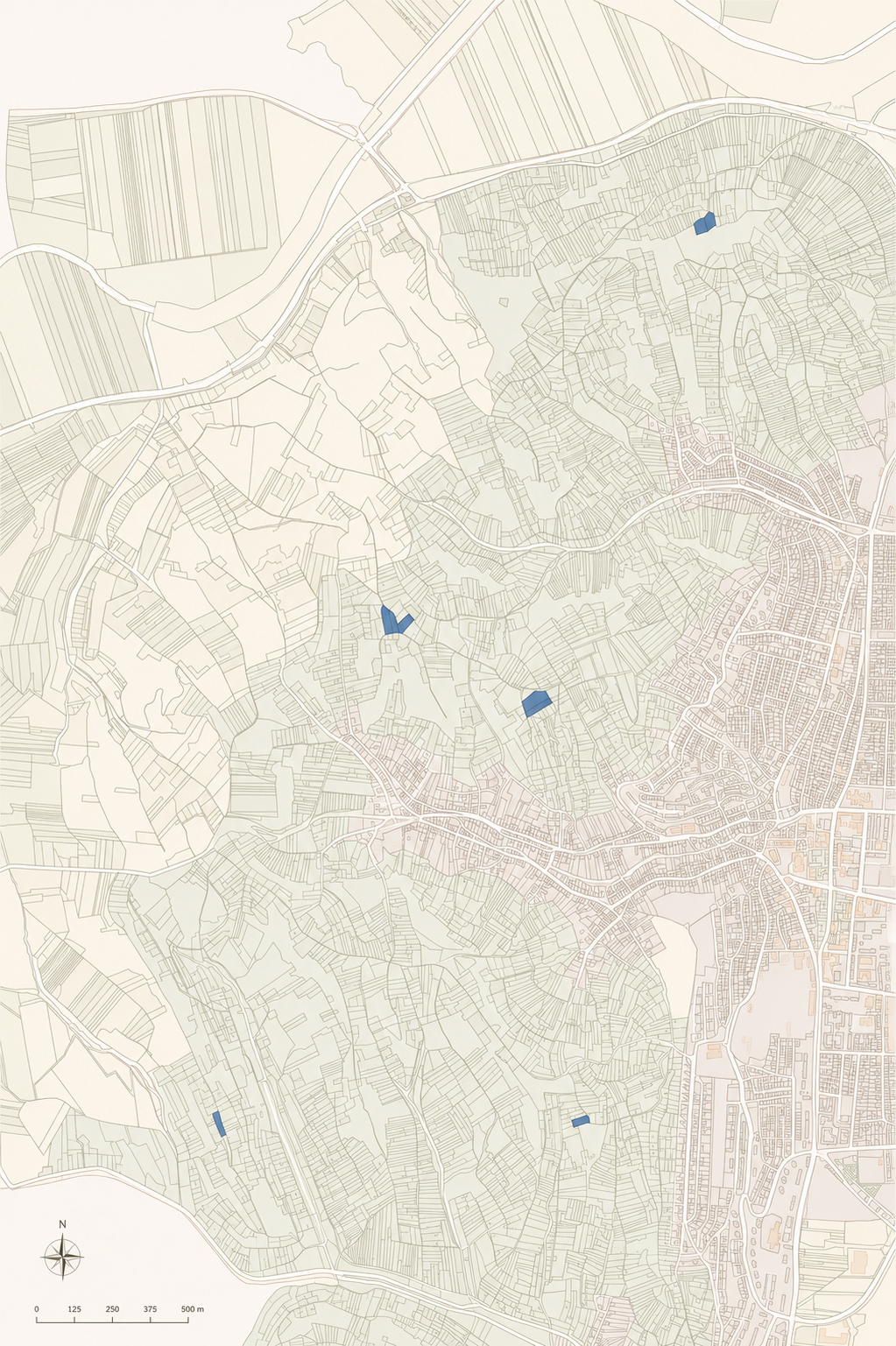
PARCELS (from North to South)
Palánki-hegy: 0.5 ha; Blaufränkisch (40%), Zweigelt (40%), Tramini (20%); planted in 1989. North-Eastern exposure, surrounded by forest, cooler microclimate, late harvest (October); in collaboration with owner and grower Attila Balogh since 2021.
Cserhát 1: 0.15 ha; Zweigelt; planted in 1981. Hilltop location, Southern exposure, warm and windy microclimate, early harvest (August).
Cserhát 2: 0.15 ha; Blaufränkisch; planted in 1983. South-Southeast exposure, mild winds, mid-season harvest (September).
Cserhát 3: 0.8 ha; Blaufränkisch (30%), Cabernet Franc (55%), Welschriesling (15%); planted in 1969. Hilltop location, Southeast exposure, warm and windy, early harvest (mid-August to mid-September).
Gyűszű: 0.15 ha; Blaufränkisch (50%), Cabernet Franc (50%); planted in 2009, high-density planting. Hilltop location, Northwest exposure, warm and windy, early September harvest.
Baranya: 0.18 ha; Kadarka; planted c. 1920. Plateau location nestled among larger hills, Northwest exposure, extremely warm, moderately windy, early harvest (mid-August).